TL;DR Summary:
Today’s brands don’t just sell, they storytell. From educating audiences about causes and products to building trust through transparency, engaging employees online, and collaborating with creators, brands use social media as a stage to inform, connect, and inspire loyalty in ways that go far beyond simple advertising.
Introduction
Let’s face it, social media isn’t just a place for dance trends and brunch photos anymore. It’s where brands get their personalities, where a single post can make (or break) a company’s image, and where creativity beats big budgets.
Think about it: you’re scrolling through Instagram, and suddenly a brand’s reel shows how effortlessly a moisturizer melts into the skin or how a tiny gadget solves a problem you didn’t know you had. Before you realize it, you’ve liked the post, checked the page, and maybe even hit “Add to Cart.” That’s the power of social media marketing.
With over 5.4 billion users worldwide and 77% of small businesses using social media to reach customers, the digital landscape has become a massive playground for brands. What’s more, 83% of marketers say social media connects them with audiences more effectively than traditional ads, proof that visibility, trust, and engagement now live online.
From witty banter between food apps to heartfelt brand stories, social media has become the ultimate stage for marketing magic. But how exactly do brands make it work?
Let’s explore six inspiring ways brands are turning everyday scrolls into lasting connections.
1. Educating and Spreading Awareness
“Content that educates is remembered. Content that sells is forgotten”
– Joe Pulizzi, Content Marketing Institute
Companies use platforms like Facebook, YouTube, and Instagram to educate audiences about products, causes, and health issues.
A classic example is when Merck, a pharmaceutical company, the first one which used Facebook to promote awareness about the Gardasil vaccine, not by hard-selling it, but by educating people about HPV and its prevention. Similarly, GlaxoSmithKline leveraged YouTube to share simple, informative videos about public health awareness.
Dove’s #RealBeauty campaign continues to promote body positivity and mental well-being through real stories and workshops. National Geographic’s Instagram feed is a blend of education and awe using breathtaking imagery and facts to raise awareness about wildlife and the planet.
This works because people trust brands that inform, not push. Educational content builds credibility, whether it’s a skincare brand explaining ingredients or a tech company simplifying new features.
2. Overcoming Consumer Skepticism
There was a time when people believed that advertised products were overpriced, because they thought that the advertisement cost was “included” in what they paid. And as a result they would approach the brands which weren’t advertised as much. Smart brands saw this as a perception problem to solve.
To overcome such skepticism, companies started using transparent marketing, which was a way of showing behind-the-scenes processes, customer testimonials, and even cost breakdowns. Brands like Starbucks tackled this head-on with “Radical Transparency”, openly sharing bean origins, ethical practices, and brewing tips, and it worked as it:
- Builds trust through honesty
- Converts skeptical buyers into loyalists
- Highlights ethical practices and social responsibility
3. Turning Employees into Brand Advocates
Some of the best brand stories aren’t told by marketers, rather they’re told by employees. Brands have realized that their own people can be their strongest ambassadors. After all, who knows the company better than the ones behind the scenes?
One IT company once introduced “Facebook Fridays,” where employees shared behind-the-scenes moments and work highlights online. What began as a small experiment quickly became a powerful trust-building tool.
Today, brands like Netflix and Starbucks follow similar “employee-first” approaches, encouraging staff to share authentic stories that humanize the brand and strengthen its community.
If you’re just starting out, here’s an easy step-by-step process to begin employee advocacy: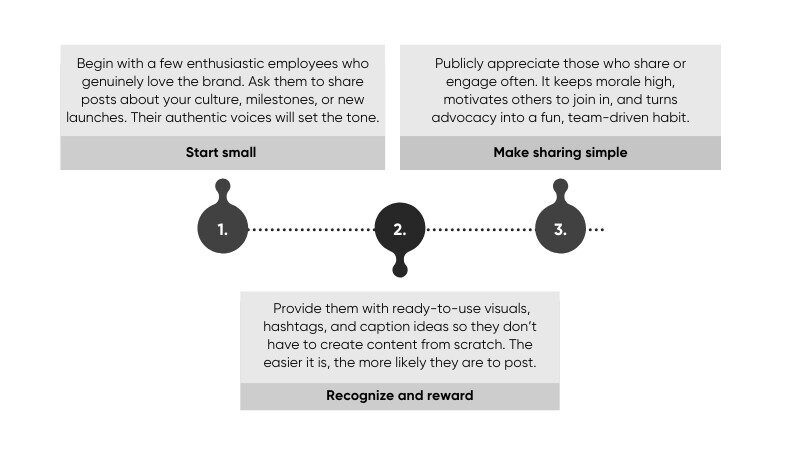
When employees genuinely believe in what they share, their voices become more powerful than any ad campaign, that’s what makes this strategy work.
4. Real-Time Engagement and Social Listening
Social media isn’t just about posting, it’s about participating. The best brands don’t just talk, they listen, observe, and join conversations at the right moment to stay relevant, relatable, and memorable.
How brands do it:
- Respond instantly to customer queries, complaints, or compliments to show attentiveness.
- Join trending discussions with humor, insights, or timely commentary that fits their tone.
“Speed wins in social media. The faster you create content in response to trends, the more you get noticed.”
— Rishabh Shekhar, Social Media Manager, Zepto
Zomato is known for jumping into trending conversations with witty, real-time replies that keep audiences engaged. Similarly, Amul’s iconic Amul Girl ads turn news and pop culture into clever posts that instantly connect with people.
But how do brands know what people are saying about them in the first place? That’s where social listening tools come in.
Platforms like Hootsuite, Sprout Social, and Brandwatch help brands track mentions, hashtags, and audience sentiment across social media. These insights allow them to identify trends early, respond faster, and even predict what kind of content their audience wants next.
In short, the combination of quick engagement and smart listening turns social media from a one-way broadcast into a real-time conversation.
5. Learning from Competitors (Before Competing)
Before you stand out, you need to look around. It might feel surprising at first but smart brands start by analyzing their competitors’ tone, style, and audience behavior on social media, in order to master themselves and stand out.
Many brands first follow their rivals, not to copy them, but to make sure they don’t look or sound identical. This helps avoid redundancy, copyright issues, confusion among audiences and the content feels fresh and distinctly theirs.
For instance, Swiggy and Zomato both dominate the food space online, yet they’ve built completely different personalities.
| Competitor | Tone | Engagement Tactics | Differentiation Idea |
| Zomato | Storytelling | Memes & polls | Focus on relatable food stories |
| Swiggy | Quirky Humor | Short videos | Lean into viral content |
Both Zomato and Swiggy know how to turn cricket fever into marketing gold. During recent tournaments, Zomato’s minimalist post instantly struck a chord with fans, while Swiggy’s playful reel, DMing the Indian cricket team, showed how humor and timing can make brands part of the national conversation.
Together, they prove that real-time marketing, when done right, keeps a brand both relatable and unforgettable.
6. Collaborating with Creators and Partners
Influencers are today’s version of word-of-mouth, only louder and faster. By partnering with trusted creators, brands reach audiences more authentically than ads ever could. It works because people trust people, much more than promotions.
Examples:
- Nykaa teams up with influencers like Komal Pandey and Malvika Sitlani to create honest tutorials and product reviews that feel real, not rehearsed.
- Zepto taps into Gen Z humor by collaborating with meme pages and Instagram creators, turning grocery delivery into something fun and shareable.
Here’s a Case Study
“Partnering with creators for authentic storytelling bridges the gap between brand intent and consumer perception. The results speak for themselves.”
— Siddharth Jindal, Brand Strategist, Nykaa
Nykaa’s #NoFilter Campaign: Authenticity That Clicked
Nykaa, one of India’s leading beauty and personal-care brands, wanted to challenge the polished, “perfect skin” advertising that often makes consumers skeptical. To connect more genuinely with its audience, Nykaa launched the #NoFilter campaign, focusing on real stories, authentic routines, and transparency.
The brand partnered with influencer Aisha Ahmed, who shared her personal skincare journey, including flaws and real results. Unlike traditional ads, the campaign educated users about skincare routines while highlighting real-life authenticity.
Users were encouraged to share their own experiences using the #NoFilter hashtag, creating a wave of user-generated content.
Key Results:
- 3.7 million organic views on Aisha’s videos in two weeks
- 25% increase in brand mentions under #NoFilter
- 18% rise in returning app visitors (women 18–25)
- 12% improvement in unaided brand recall
Nykaa’s #NoFilter campaign shows how authentic storytelling and creator collaboration can overcome skepticism, educate audiences, and build meaningful engagement, all while boosting measurable results.
Turning Ideas into Action: A 4-Week Brand Boost Plan
You’ve seen how brands win on social media, but strategy means little without execution.
To help you get started, here’s a simple 4-week roadmap to put these insights into motion and build a more engaging, authentic presence online.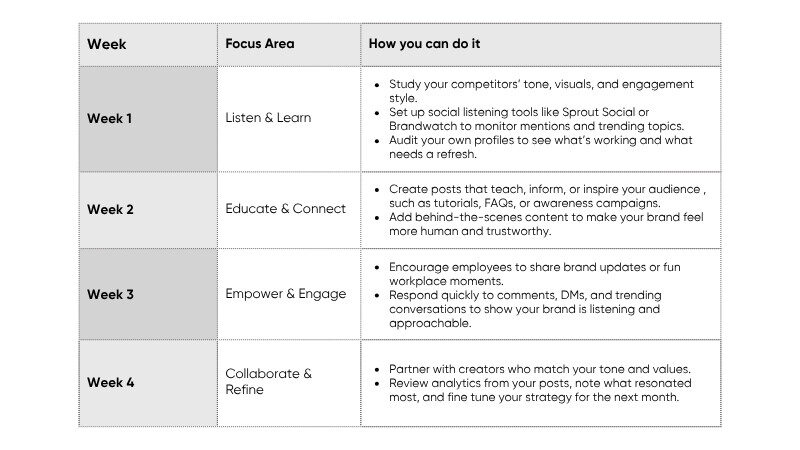
Conclusion
Social media marketing isn’t about being everywhere, it’s about showing up smartly.
The best brands don’t just post for the sake of it. They tell stories, start conversations, and build communities that keep people coming back. Whether it’s being transparent, responsive, or simply relatable, these strategies prove that when done right, social media isn’t just marketing, it’s momentum.
Because in today’s digital world, it’s not the loudest brands that win, but the ones that truly connect.
About The Wise Idiot
We’re The Wise Idiot, and yes, that’s really our name. We’re a content marketing agency that’s been helping startups and growing brands tell their stories since 2017.
Here’s what we do: we take the stuff that makes your business special and turn it into content that actually works. Whether that’s writing that doesn’t put people to sleep, websites that make visitors stick around, or social media that gets people talking, we handle it all.
FAQs
- Why is social media marketing important for brands today?
Because it lets brands connect directly with audiences, build trust, and stay relevant in real time. - How can smaller brands compete with big names on social media?
By focusing on authentic storytelling, quick engagement, and niche communities rather than big-budget ads. - What’s the best way to handle negative feedback online?
Acknowledge it quickly, stay polite, and turn criticism into a chance to improve and show accountability. - How do brands measure success on social media?
Through engagement metrics like reach, clicks, shares, and conversions, not just follower counts. - How often should a brand post on social media?
Consistency matters more than frequency, 3 to 4 meaningful posts a week perform much better.