TL;DR
AI tools like ChatGPT, Google AI, and Perplexity increasingly cite LinkedIn articles as trusted sources. As traditional website traffic declines, LinkedIn content offers a new discovery channel through AI answers. Publishing expert, long-form, and experience-driven posts on LinkedIn can boost authority, search visibility, and brand recall. Businesses that treat LinkedIn as a knowledge platform, not just social media, gain an early advantage in AI-powered search.
Introduction
Something interesting is happening on LinkedIn. Recent study by Semrush shows that LinkedIn is among the five most cited domains on ChatGPT, Google AI and Perplexity.
In fact, these AI tools are now citing LinkedIn content up to five times more often than they did just a few months ago. Let me break down what this means for you and your business.
The New Search Reality
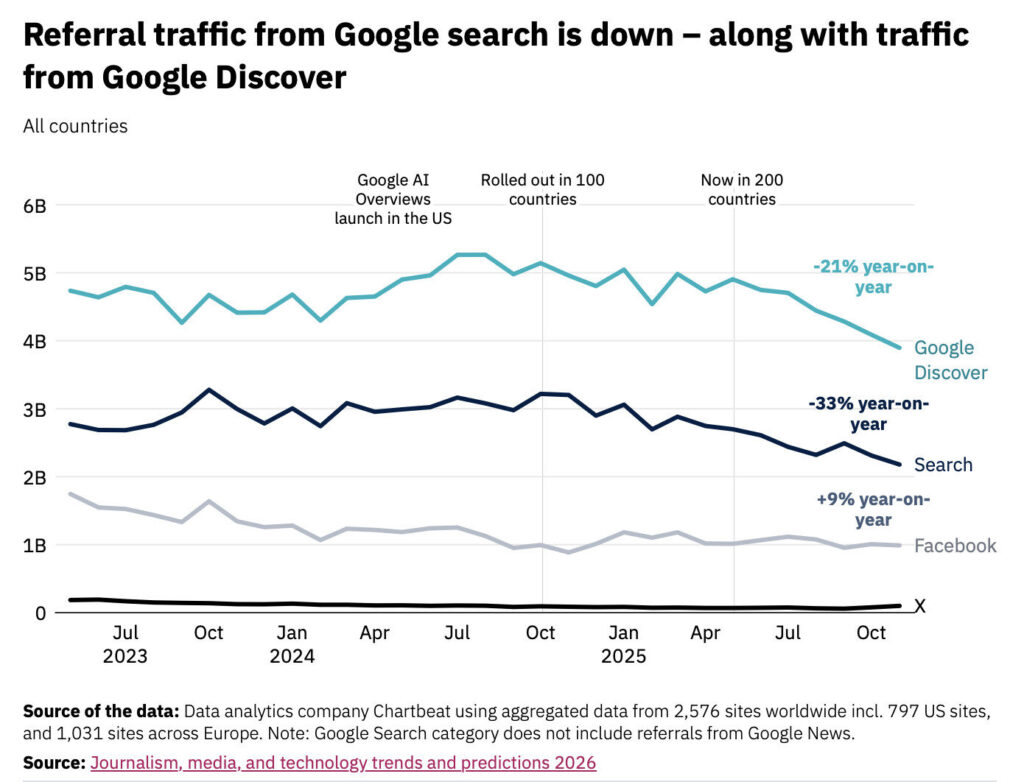
Everybody is talking about how their referral traffic is dropping as more people get their answers directly from AI tools instead of clicking through to websites.
While website traffic is shrinking, AI tools are actively searching for quality content to cite. And they’re finding a lot of it on LinkedIn. Of those thousands of LinkedIn sources cited by AI tools, over 15,000 come specifically from LinkedIn Pulse articles. That’s long-form, thoughtful content published directly on the platform (example: Content Marketing, Simplified).
Why AI Tools Trust LinkedIn
LinkedIn offers verified professionals sharing expertise in their actual field of work. Your profile shows your career history, your credentials, your network. There’s built-in credibility. It builds a thought leadership Avataar for an individual. Which any AI tool would love.
When someone asks ChatGPT about marketing strategies or business trends, the AI is increasingly pointing to LinkedIn articles written by real practitioners, not just journalists covering the topic from the outside.
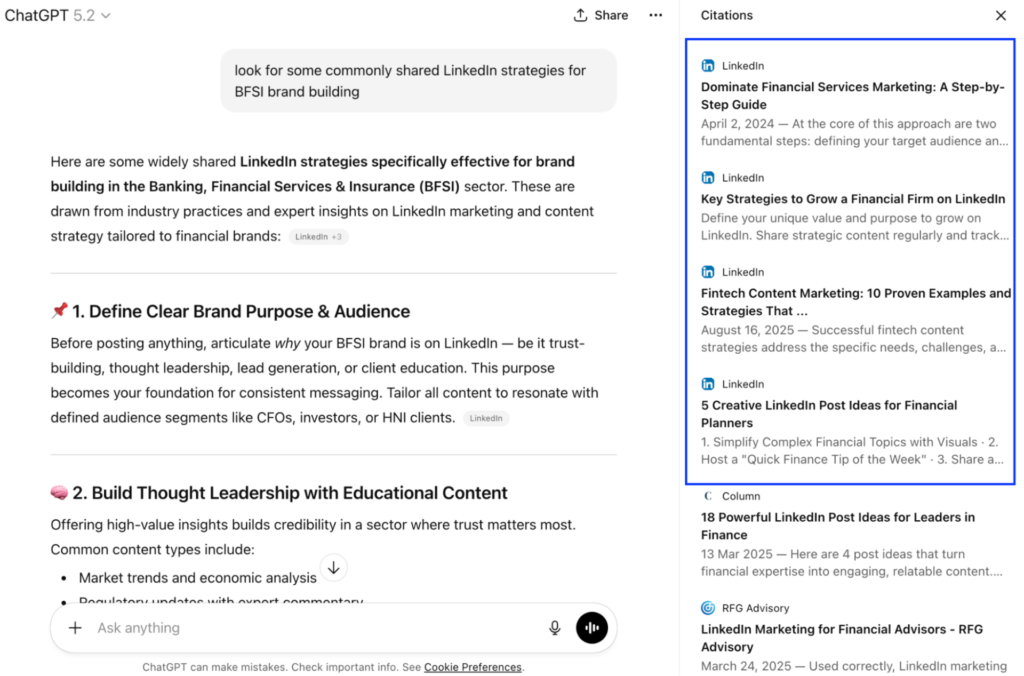
This creates an entirely new opportunity. Your content isn’t just reaching the people who follow you. It’s potentially influencing thousands of AI-generated responses to questions in your industry.
Lily Ray, VP of SEO Strategy at Amsive, says “Real opportunities remain for those who focus on authenticity… Building strong personal brands and leveraging social platforms like LinkedIn are key ways to stand out because they create content strategies that search engines can’t nullify.”
What This Means for Your Content Strategy
The game has changed. Content you publish on LinkedIn can now have impact in three ways:
- Direct reach to your network and followers
- Search visibility when people look for your name or company
- AI citation when people ask questions related to your expertise
That third one is brand new. And it’s powerful.
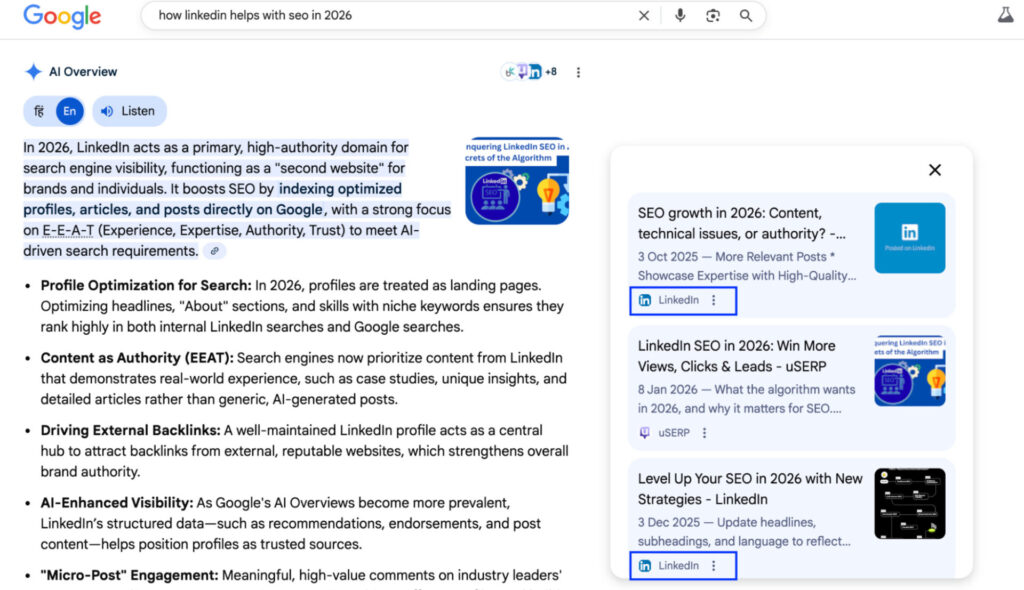
When an AI tool cites your LinkedIn article in response to someone’s question, you’re not just getting exposure, you’re being positioned as an authority. The AI is essentially saying “here’s what an expert thinks about this.”
How to Create LinkedIn Content AI Actually Cites
If AI tools are scanning LinkedIn for trustworthy sources, the obvious question becomes: what kind of content do they choose?
Not everything gets picked up. Quick updates, motivational posts, and trend commentary rarely make the cut. AI systems prefer depth, clarity, and expertise.
Here’s a simple framework you can follow:
- Start with real questions your audience asks
Think:
- “How do we reduce CAC in B2B?”
- “What does RBI policy mean for fintech startups?”
- “How should brands prepare for AI search?”
If people ask it, AI tools will eventually answer it.
- Write in an explanatory format
Structure helps machines understand your content:
- Clear headline
- Subheadings
- Steps or frameworks
- Examples
- Summaries
Messy writing gets skipped. Organized thinking gets cited.
- Use lived experience, not recycled advice
AI already knows generic tips.
What it values is perspective:
- what worked
- what failed
- numbers
- case studies
- lessons from the field
That’s information only you can provide.
- Go deeper than a typical post
Aim for 800–1,500 words when publishing articles.
Depth signals authority. Short takes signal opinions. - Make your expertise obvious
Your profile matters as much as your article.
Complete headline, experience, and credentials help AI systems trust you as a legitimate source.
Think of it this way:
If an AI had to quote someone in your industry, would your article look like something written by an expert or a casual observer?
Write for that standard.
Making This Work for You
At The Wise Idiot, we help businesses build their LinkedIn presence strategically. And now, that strategy includes optimizing for AI discoverability.
This isn’t about changing everything you do. It’s about being more intentional:
- Publishing thoughtful articles on LinkedIn
- Building credibility through your profile and content consistency
- Positioning yourself as a knowledge source
- Creating content that answers real questions in your industry
The businesses that figure this out early won’t just have better LinkedIn engagement. They’ll be shaping the answers people get when they ask AI tools about topics in their space.
The Bigger Picture for 2026
We’re watching search evolve in real-time. People search on AI tools and these tools need trusted sources to cite. Increasingly, they’re pulling insights straight from LinkedIn.
Which makes 2026 a turning point.
This is the year LinkedIn becomes your go-to marketing platform. It’s not optional, it’s not secondary, but core, and even AI seems to agree with this.
Because when businesses share real expertise and practitioner insights, LinkedIn becomes more than a social network. It becomes a source.
The question is: will your expertise be part of that conversation?
For businesses that take thought leadership seriously, now’s the time to double down. Sharpen your profile, clarify your positioning and publish insights worth quoting.
That’s exactly what we help businesses do at The Wise Idiot. Position your presence for both human audiences and AI discovery, so your expertise travels further than ever before.
FAQs
1. Why are AI tools citing LinkedIn articles more often?
AI tools prioritize credible, expert-led content. LinkedIn profiles show professional history, skills and real-world experience, which makes articles more trustworthy and easier to attribute to subject-matter experts.
2. Does LinkedIn content help with SEO and search visibility?
Yes. LinkedIn articles rank on Google and are increasingly referenced by AI answer engines. This creates visibility beyond your network through both traditional search and AI-generated responses.
3. What type of LinkedIn content gets cited by AI tools?
Long-form, experience-based articles perform best. Content that explains processes, shares insights, answers specific questions, or provides frameworks is more likely to be referenced than short updates.
4. Are LinkedIn posts better than LinkedIn articles for discoverability?
Articles (LinkedIn Pulse or long-form content) tend to perform better for search and AI citations because they provide depth, structure and relevance. Posts are great for engagement but less reliable for long-term discoverability.
5. How often should businesses publish LinkedIn articles?
Consistency matters more than frequency. One or two well-researched, insight-driven articles per month can outperform frequent, low-value posts.
6. How can I optimize LinkedIn content for AI discoverability?
Focus on:
- Clear headlines
- Specific topics
- Structured formatting
- Real expertise and examples
- Complete, credible profiles
- Answering common industry questions
7. Is LinkedIn replacing traditional websites or blogs?
No. It complements them. LinkedIn acts as a distribution and credibility layer. Your website builds ownership and conversions, while LinkedIn improves discovery and authority.
8. Who benefits most from this strategy?
Consultants, founders, B2B brands, agencies, and subject-matter experts. Anyone whose business depends on trust and expertise can gain from being cited as a reliable source.