TL;DR
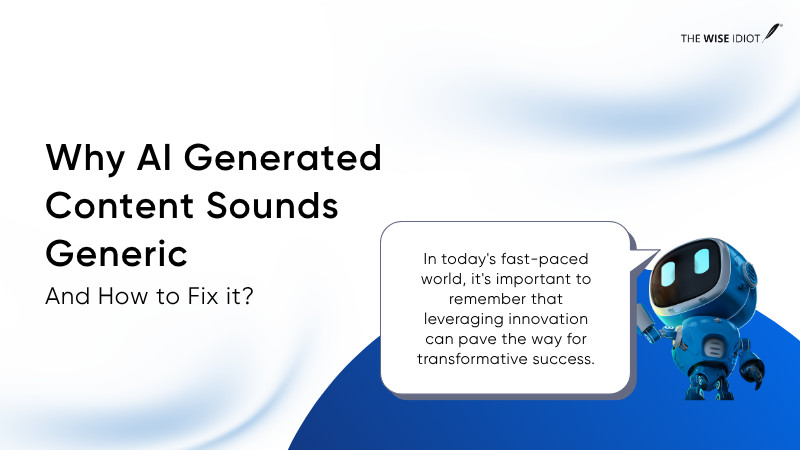
AI is helping teams write blogs, social posts, emails, and more at scale. However, because AI relies on patterns from existing content, its outputs can often feel repetitive and generic. The missing ingredient is human context like, real stories, customer insights, expertise, and brand perspective. The brands creating the strongest content today aren’t choosing between AI and humans; they’re combining both to create content that’s faster to produce, but still original, useful, and distinctly theirs.
What Does It Mean for AI Content to Sound Generic?
A few years ago, creating content meant staring at a blank page and figuring out where to begin. Today, AI can generate blog posts, social media captions, emails, video scripts, and LinkedIn posts in a matter of seconds. The challenge is no longer producing content quickly. The challenge is making it memorable.
As AI becomes a part of everyday marketing workflows, a lot of content is starting to sound the same. You’ve probably come across articles and even LinkedIn posts that are grammatically perfect and well-structured but somehow feel empty. They say all the right things without really saying anything new.
The reason is simple. AI is excellent at identifying patterns and replicating them. What it cannot do on its own is bring real-world experience, unique observations, or genuine perspective into the conversation. That’s why some AI-generated content feels generic, while other pieces feel insightful and human.
Why Does AI Content Sound Generic?
AI can generate content quickly, but without the right guidance, the output often feels repetitive and lacks originality. Some common reasons include:
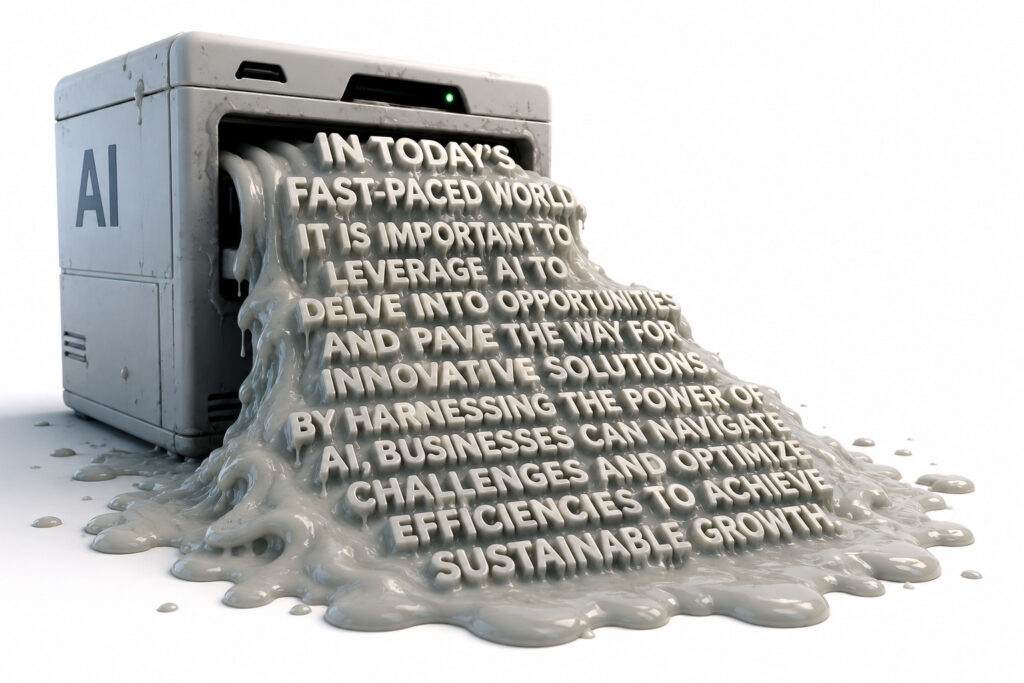
- Repetitive sentence structures: AI tends to follow similar patterns, making different pieces of content sound alike.
- Overused vocabulary: Generic phrases and buzzwords appear frequently, reducing the uniqueness of the content.
- Limited original insights: AI relies on existing information and may struggle to offer fresh perspectives or unique viewpoints.
- Lack of personal experience: AI cannot draw from real-life experiences, stories or emotions, making the content feel less authentic.
- Neutral brand voice: Without specific prompts, AI often produces content that lacks a distinct personality or tone.
AI is a powerful writing assistant, but creating content that truly stands out still requires human creativity, expertise and refinement.
How to Ensure AI Content Doesn’t Sound Generic
AI can produce a solid first draft, but the final output should always be refined before publishing. A few simple steps can make the content more original and aligned with your brand.
- Give AI clear constraints: Specify the audience, structure, and what to avoid. The more specific the prompt, the more tailored the output.
- Remove generic or repetitive points: Eliminate obvious statements, clichés and filler that don’t add value to the reader.
- Add real data and insights: Include relevant statistics, research, case studies or industry examples to make the content more credible and informative.
- Include your perspective: Add opinions, observations or practical takeaways that reflect your expertise. This helps the content stand out from similar AI-generated pieces.
- Edit for your brand’s tone of voice: AI doesn’t automatically understand your brand personality. Review the content to ensure the language, style and messaging are consistent with your brand.
- Use real-world examples: Replace generic examples with actual scenarios that your audience can relate to.
- Don’t publish the first draft: Treat AI-generated content as a starting point. Editing and refining the draft is often what transforms it from average to engaging.
The Missing Ingredient in AI Content: Human Context
Many people believe the secret to great AI content lies entirely in writing better prompts. While prompts are important, they are only part of the equation.
As Nikita, Content Marketing Manager at The Wise Idiot, explains:
“One thing we’ve learned using AI every day is that prompts are only half the equation. Your inputs matter just as much. Feed it real stories, customer conversations, and the thinking behind a creative decision, and the output starts sounding less like AI and more like you.”
This is where many brands miss an opportunity. They ask AI to create content without providing the context that makes their business unique. Customer feedback, lessons learned from campaigns, industry observations, internal expertise, and real experiences are the elements that transform a generic draft into something meaningful.
AI can organize information effectively, but it needs something original to work with. The quality of the output is often a reflection of the quality of the input.
What We Do Differently at The Wise Idiot
At The Wise Idiot, AI is integrated into several stages of the content creation process. It helps us explore angles (brainstorming), speed up research, organize information, and create stronger first drafts.
What it doesn’t do is replace strategic thinking or creative judgment. The best content still comes from understanding audiences, identifying meaningful insights, and knowing what story needs to be told.
AI has accelerated the process, but it has not replaced the human experience that gives our content its depth and personality.
Conclusion
AI has fundamentally changed how content is created. But, the growing accessibility of AI has made originality more valuable than ever. When everyone has access to the same tools, the differentiator is no longer how quickly content can be produced. It is the quality of the thinking behind it.
The brands that still stand out are the ones combining the efficiency of AI with genuine expertise, clear opinions, and a deep understanding of their audience. AI can help you write faster. Human insight is what makes people care.
About The Wise Idiot
We don’t believe in empty vanity metrics or high-level corporate fluff. We believe in steady, organic growth by creating structural, high-converting content frameworks for BFSI, SaaS, and EdTech brands who care about building real business equity.
Whether it’s mapping out your content distribution loops, establishing recognizable video franchises, or scaling your search footprint. We handle the strategy, creation, and distribution. If you’re ready to move past generic content habits, schedule a discovery call with our founding team. Let’s talk through how this applies to your brand.
FAQs on AI-generated Content
Q1. Why does AI-generated content often sound repetitive?
A1. AI models learn from existing content across the internet and generate responses based on patterns. Without unique context or direction, they naturally produce content that follows familiar structures and commonly used phrases.
Q2. How can I make AI-generated content sound more human?
A2. Start by providing real context. Include customer insights, personal experiences, industry observations, and brand-specific information in your prompts. Then edit the draft to add personality, stronger opinions, and practical examples.
Q3. Does Google penalize AI-generated content?
A3. Google does not penalize content simply because it was created with AI. However, it prioritizes content that is useful, trustworthy, and demonstrates expertise. Generic, low-value content may struggle to rank regardless of how it was created.